Tween Girls and Mothering in The Age of Exclusion
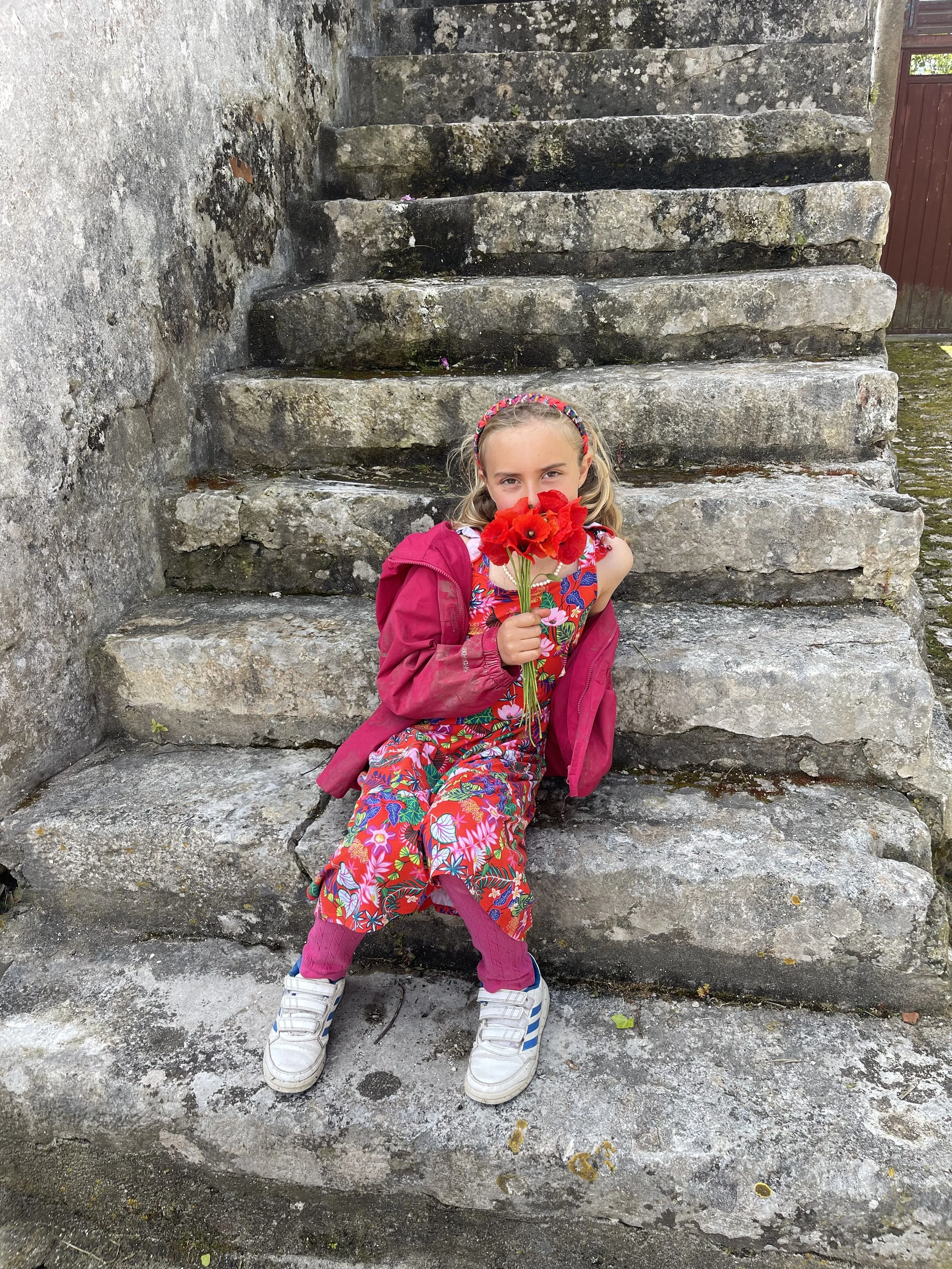
I was up in the middle of the night. Part of it was muscle soreness. I had started a new training routine. But the rest of it was my daughter. She's ten, almost eleven, and her friendships this year have refused to settle. Fast-changing. Close one week, silent the next. And yes, it is her life, not mine. But it doesn’t make it less torturous.
How can the friendship dynamics of preteen girls disturb an adult at 3 a.m.? It’s familiar. It’s visceral. It brings back my feelings of girlhood exclusion. Of not understanding the social choreography. Of being too much or not enough. Of watching the group move around you like a current you can’t swim in.
And now, I watch her in it. My girl: sharp, funny, strong-willed. The youngest of three, with two older brothers. She’s had to learn to hold her ground. That’s part of her strength. But I wonder: does that steel she needs at home come across as bulldozing to her peers? Does the muscle she’s built to survive sibling life read as domineering to ten-year-old girls who are still learning to assert themselves?
This year it's been a revolving door of closeness and rupture. One week someone is the best friend. The next week she’s too much: too dramatic, too clingy, too fake. Then someone else is out. The alliances shift, power rotates. But it’s never discussed among the girls. It just moves, unspoken. And because they don’t name it, they don’t repair it.
Which means the story hardens. She’s bossy. She’s fake. She’s not cool. She’s too needy. She lies. She thinks she’s better. She takes sides.
The story fossilizes, and when the next rupture comes, it falls right into the same groove again.
And it’s not just the girls. It’s the group around them. One girl gets excluded, and suddenly others: some older, not even in the same class, stop saying hello. The social pain expands outward. Side-taking becomes a show of loyalty. Coldness becomes a strategy.
Some of it is hormonal. A few of these girls are already sliding into puberty (moody, shifting, and harder to read). Sophia’s not there yet. Her body hasn’t turned on her. She still plays and laughs easily. I wonder if that’s part of why she doesn’t quite land with the others. Or maybe she does, and I just can’t see it from where I’m standing. I keep trying to see what sets it off, what pulls it apart. Trying to make sense of how the girls treat each other.
Last weekend, I watched it play out in my own garden. I had invited a few families over, hoping that without the full class dynamic, some of the tension might dissolve. That maybe two of them, who had once been close, might rediscover their rhythm. But it didn’t happen. There was tightness. Silence. One girl barely looked at my daughter. Another stuck close to her, not saying much but making it clear where she stood. I said hello. They barely nodded. I couldn’t tell if it was disinterest, awkwardness or strategy. The tension was sharp, the silence sharpened it further. Like they’d agreed to forget my daughter was there. And I wasn’t even sure about how Sophia felt. All I could feel was my own sense of injury (maybe my ten-year-old self was remembering how that silence once landed in me).
And so I find myself circling the same questions. They follow me around, half-formed, unanswered.
Do I talk to the mom of the girl Sophia is currently at odds with?
Do I talk to the mom of the girl who suddenly stopped speaking to her?
Do I reach out and ask what was said, what story is being passed around?
Or do I stay out of it and let the kids figure it out?
The truth is, I don’t trust that time will fix it. I don’t think summer space is a guaranteed reset. I think the story each of them is carrying about who hurt who, about who betrayed whom, hardens the longer it goes unspoken.
But I also don’t want to micromanage Sophia’s social world. I don’t want to rescue her. I want her to develop her own awareness. Her own capacity to reflect and repair. And she can. She’s in it too. I’ve seen her exclude. I’ve seen her shut someone out when the mood shifts. I’ve seen her double down instead of reach out.
So we talk about it. I ask:
“Do you think maybe you shut her out a bit?”
“Can you imagine what that felt like for her?”
“What do you think your part in this was?”
And she sometimes says yes. She sometimes admits it. Other times she shrugs. Says it’s not a big deal. She laughs easily. Doesn’t linger. But sometimes I wonder if that’s strength, or just a way out of feeling too much. And I don’t know if that’s clarity or detachment. If it’s resilience or armor. I don’t know if she’s fine because she’s okay, or because she’s learned not to feel the impact.
What I do know is that this is not just childhood drama. This is where they start to learn who they are through each other. This is where girls start learning how power works in relationships: how inclusion is offered or withheld, how loyalty is performed, how silence can assert status.
And if we don’t help them reflect, don’t help them see the patterns, they might grow up believing this is just how friendship works. That it’s normal to lose someone and never talk about it. That rupture doesn’t need repair. That belonging is something to win, not something to build.
I’m not trying to make the girls adults. They’re ten. They’re messy. But I am trying to give Sophia a language for what’s happening. To help her slow it down. To feel both the hurt she carries and the hurt she causes. To know the difference between having boundaries and punishing someone with silence.
And maybe that’s all I can do.
Not control the narrative.
Not chase down the parents.
Not make the friendships come back.
But stay with her while she learns how to hold both strength and softness. How to be someone who can own her part and still know her worth.

Are you interested in working on your personal development? Are you looking for a life coach or a life consultant? Are you feeling stagnant? Do you want to jumpstart change?
My transformational approach is a process where awareness, alignment, and action work together as catalysts to create momentum for change.
*Awareness is knowing what you genuinely want and need.
*Alignment is the symmetry between our values and our actions. It means our inner and outer worlds match.
*Action is when you are conscious that what you say, do and think are in harmony with your values.
Together we build an understanding of what you want to accomplish, and delve deeply into building awareness around any thoughts and assumptions that you may already have. To truly transform your life, I will empower you to rethink what’s possible for you.
__
Learn more about my approach to life consulting and relationship coaching here or get in touch for your free 30-minute consultation here! Don’t forget to follow along @LilyManne on social for more regular updates!