Unspoken Relationship Grief: Why It Shows Up Years Later
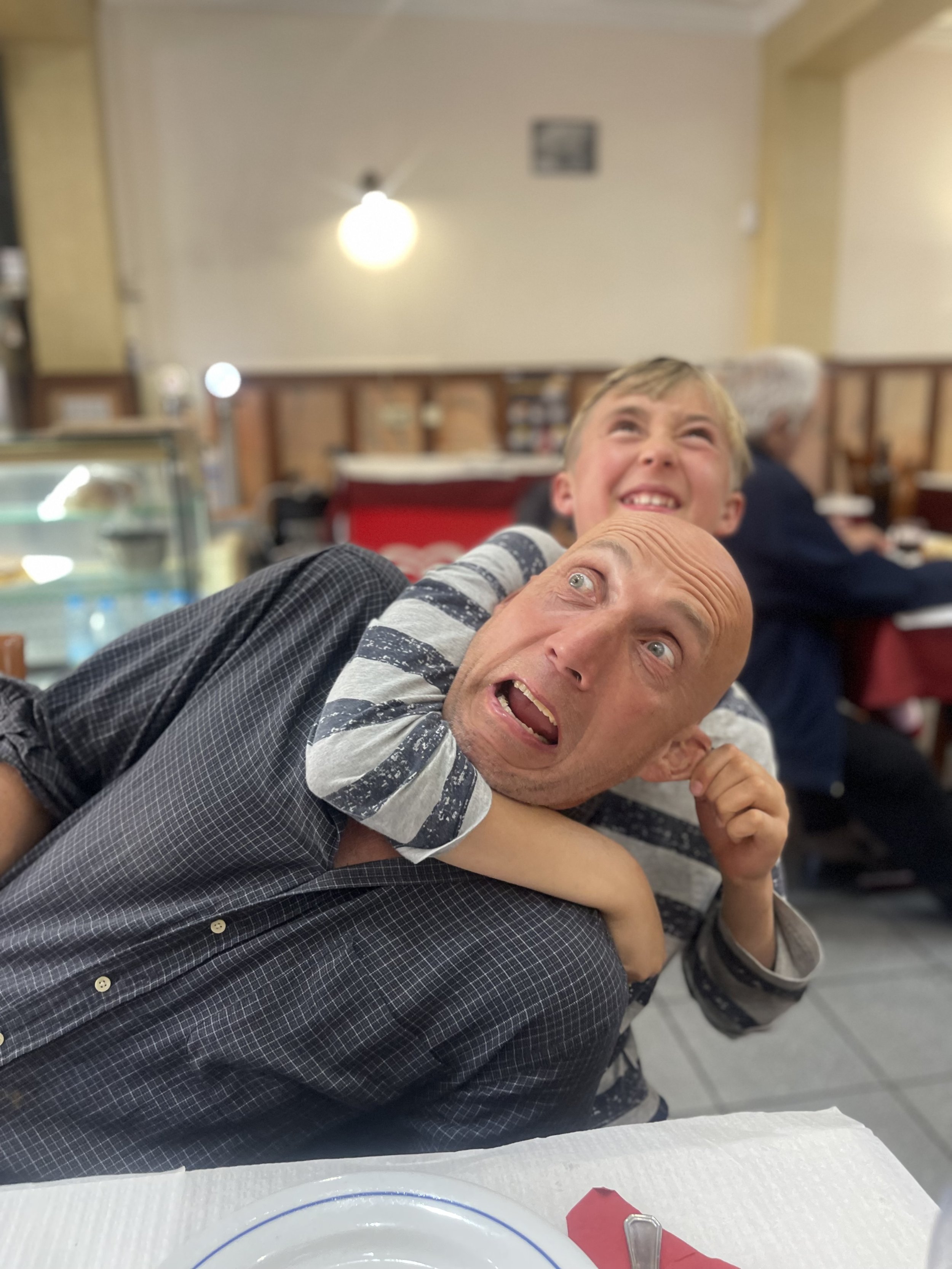
She tried to catch his eye, but he didn’t see her.
They were at a beach house, surrounded by friends, kids, the low hum of vacation logistics—games, pudding passed around, plans slipping through the cracks. She had hoped they’d all go out for lunch, something easy so they could spend the day by the sea. Instead, she was in the kitchen, making food. People wandered in and out, helping themselves, half-engaged. He was off in another room, absorbed in something else—his phone, a screen, a conversation. She felt alone in the effort.
There had been other versions. At dinner parties, when she needed help setting out the plates or pouring drinks, and he didn’t notice. At home, when the babies were crying and she had to raise her voice just to be heard. Or when he said he’d barbecue but disappeared into a conversation and she ended up doing it all. Over and over, she felt like her needs were secondary. That to be with him, she had to carry more, ask less.
He had his own rhythm, his own inner world. And she began to feel like she was too much for it.
But she was taught to be treasured.
That was the story she was raised with: that she was radiant, capable, worthy of devotion. That love would feel like attention. That being chosen would be obvious.
And so when she wasn’t met—when she had to reach too far, or wait too long, or do it herself—something in her began to ache. But in those small, invisible moments of need, he slipped away. And she learned to let go. To not make it a thing. Or to express her unhappiness in sideways ways—through silence, or irritation, or unspoken tests. A way to make him prove himself, but never fully acknowledging the real wound.
Back then, she couldn’t afford to feel how much it hurt.
To feel it would’ve meant facing a truth she wasn’t ready for: that the man she loved wasn’t there in the way she needed.
And if she stayed—what did that say about her?
So the grief waited. And waited.
Until now.
Now that he’s changed. Now that he sees her. Now that he shows up when she asks.
Only now does her body begin to tell the truth of what it once endured.
The heartbreak that didn’t fit the narrative.
The longing that couldn’t be spoken without destabilizing everything.
Sometimes we can’t grieve something while it’s happening.
It would cost too much.
It would ask too much.
We adapt. We explain. We make it work.
And the grief waits for safer conditions.
Sometimes, it takes time for change to catch up to us.
For our body to believe what our mind already knows: it’s different now.
And once that reality is absorbed, once the new safety settles in—
we can finally let ourselves feel what we had to swallow.
That’s when the old pain begins to move.
That’s when forgiveness becomes possible.
Not as a moral act, but as a release.
It’s not that people intend to hurt each other.
It’s that most couples enter relationship with old templates: strategies for closeness, survival, control, care. Often unconscious. Always learned.
One person may have grown up needing to preserve space—to not be asked for too much, to protect their sovereignty at all costs. Another may have learned to track everyone else’s needs in order to stay connected: to attune, accommodate, and avoid abandonment.
The more one partner asks, the more the other retreats.
The more one retreats, the more the other demands.
Not because they’re unkind or incompatible: but because they’re speaking different emotional languages.
Each trying to protect something tender.
And in that protection, they may unintentionally wound each other.
He may need to assert independence, not realizing she experiences it as rejection.
She may need reassurance, not realizing he experiences it as pressure.
They move through a season of quiet misunderstanding.
Invisible wounds.
Unmet bids.
Bitter silences that don’t know what they’re responding to.
Both people just trying to stay intact while learning how to be together.
When the pain isn’t spoken, it doesn’t disappear. It gets buried. Folded into the background of daily life.
It shows up as distance.
As sharpness in the tone.
As silly fights and stubborn frustrations.
Neither really sure what they’re fighting about.
And because we don’t name the hurt, we don’t get to mourn it.
To say it out loud might unravel the story we’ve told.
To feel it might mean confronting how lonely we were.
How much we overfunctioned.
How long we waited for something that never quite arrived.
We move forward.
We get good at functioning on top of it.
We build lives with unspoken grief packed into the corners.
But sometimes, the partner does change.
He grows.
He learns how to stay.
He listens.
He shows up.
And suddenly, she has what she always wanted.
But it’s not simple.
Because now the love coexists with the pain.
The presence sits next to the memory of absence. The safety doesn’t erase the history: it illuminates it.
To fully receive him now, she has to come to terms with what it cost to wait.
She has to grieve the version of herself who held so much.
Who made it okay when it wasn’t.
Who tucked in her needs.
Who carried the weight of both of them just to keep going.
And that grief isn’t a sign that something is wrong. It’s a sign that she’s finally safe enough to feel what she couldn’t feel then.
Grieving what you never got doesn’t mean you’re ungrateful for what you have now.
It means you’re integrating.
It means the truth has landed in your body.
It means your system finally believes: it’s safe to let go.
Grief isn’t the opposite of love.
It’s what makes love honest.
It names what was missing, so what’s here now can fully land.
It’s what allows us to say:
I’m here now. But I wasn’t always. And that matters.
Learn more about my approach to life consulting and relationship coaching here or get in touch for your free 30-minute consultation here! Don’t forget to follow along @LilyManne on social for more regular updates!